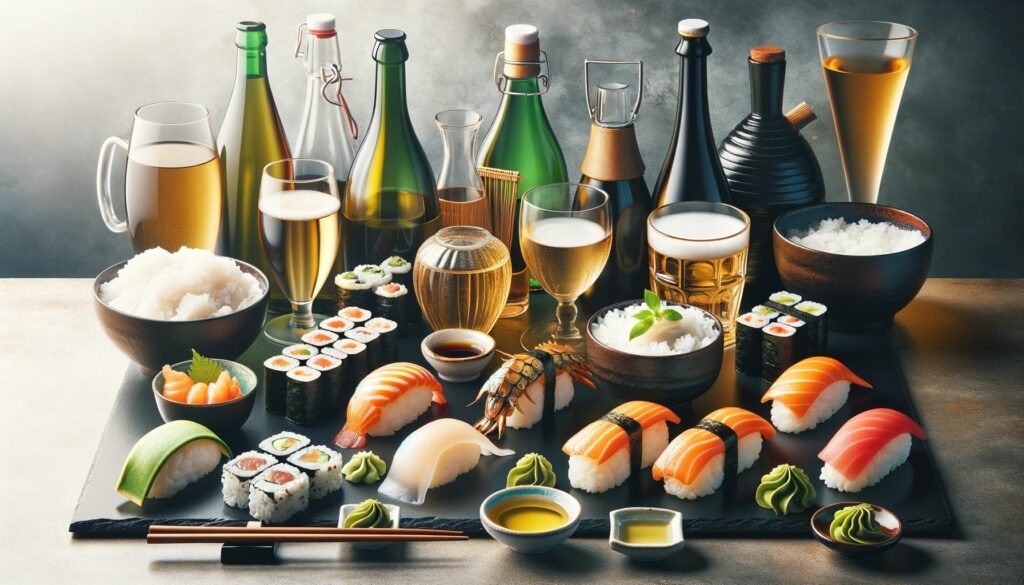
- Drinks for sushi as the art of pairing
- Green tea — the timeless classic
- Sake with sushi — the soul of Japanese taste
- White wine — European-style sophistication
- Sparkling wine & champagne — festive choices
- Fusion cocktails — the new generation
- Non-alcoholic drinks — refreshing harmony
- What to drink with different rolls — pairing rules
- Drinks that don’t work well with sushi
- Beverage culture in Japan — a tradition turned art
- Sushi drinks as part of a gastronomic ritual
- Frequently Asked Questions (FAQ)
- Conclusion: create your own harmony of taste
Sushi is not just food, but the art of balancing taste, aroma and texture. But even the best rolls need the right accompaniment, because it is the drink that can either emphasize the harmony of taste or destroy it. So the question of what to drink sushi with is not a trivial matter. In Japanese culture, choosing a drink is a philosophy where everything matters: aroma, temperature and method of serving.


Drinks for sushi as the art of pairing
The Japanese believe that the true harmony of a dish is manifested when the drink does not interrupt, but continues its aftertaste. That is why drinks for sushi are selected delicately. The ideal option cleanses the receptors, emphasizes the texture of fish and rice and leaves a feeling of freshness. Traditional options – green tea and sake – have today been supplemented with white wine, champagne, cider and cocktails, which create a modern fusion format of Japanese cuisine.
Green tea — the timeless classic
The first and most famous drink to accompany sushi is green tea. It cleanses the receptors, balances the salt of soy sauce and helps to fully experience the natural taste of fish. It is best to choose sencha, genmaicha or matcha, brewed at 70–80 °C. Such tea goes well with nigiri or light fusion rolls with tuna and vegetables. For the Japanese, it is not just a drink, but a symbol of respect for the dish: it creates a balance between simplicity and sophistication.
Sake with sushi — the soul of Japanese taste
When it comes to traditional sushi drinks, sake always holds a special place. Its delicate rice aroma perfectly emphasizes the freshness of the fish. Light sake, junmai daiginjo or ginjo, cooled to 10–15 °C, tastes best. It goes perfectly with rolls with salmon, eel, scallops or avocado. The uniqueness of sake is that it creates a soft, slightly sweet harmony, thanks to which the taste of sushi becomes deeper.
White wine — European-style sophistication
In modern sushi bars, dry white wine has become the most popular alternative to sake. Sauvignon Blanc, Pinot Grigio or Riesling add a light acidity that balances the delicate rice and creamy cheese in Philadelphia or California rolls. White wine does not dominate the taste, but emphasizes it. Its purity makes sushi even more sophisticated, so a glass of chilled wine is the perfect companion for a modern-style dinner.
Sparkling wine & champagne — festive choices
When sushi is served for a special occasion, sparkling wine or champagne creates a festive mood. Its delicate bubbles add freshness, and the light acidity goes well with wasabi, shrimp and baked rolls. Served at a temperature of 8–10 ° C, sparkling wine not only emphasizes the taste, but also makes the presentation elegant. This is the choice for those who want to turn an ordinary dinner into a gastronomic event.
Fusion cocktails — the new generation
Modern gastronomy offers bold combinations – today sushi is drunk with light fusion cocktails. Combinations of ginger, yuzu, cucumber gin or citrus liqueurs create bright contrasts without overpowering the main taste of the dish. Gin with cucumber goes well with tuna, ginger mix – with shrimp, and yuzu mojito harmonizes perfectly with mango. Such cocktails add modernity to the dinner, making it lively and emotional.
Non-alcoholic drinks — refreshing harmony
Not everyone chooses alcohol, so modern restaurants offer non-alcoholic drinks that are not inferior in taste. Mineral water without gas helps cleanse the receptors, ginger lemonade adds a light spiciness, and citrus fresh juices perfectly emphasize fruit or vegetable rolls. This choice is ideal for lovers of natural flavors and light dinners.
- still mineral water — cleanses the palate,
- ginger lemonade — adds light spiciness,
- fresh citrus juices — accent fruit or vegetable rolls.


What to drink with different rolls — pairing rules
Green tea or light sake are best suited for classic nigiri, as they maintain a balance of purity and tenderness. Maki tastes harmoniously with dry white wine, and fusion rolls go well with sparkling or aromatic cocktails. Baked rolls are best revealed with champagne or cider, while colorful sushi will truly shine in the company of refreshing lemonade or fruit wine. Each combination creates its own taste story.
- Nigiri: green tea or light sake for purity and delicacy.
- Maki: dry white wine.
- Fusion rolls: sparkling wine or aromatic cocktails.
- Baked rolls: champagne or cider.
- Colorful sushi: refreshing lemonade or fruit wine.
Each pairing tells its own flavor story. For a festive feel, choose white or sparkling wine — or simply order sushi delivery and enjoy a worry-free match.
Drinks that don’t work well with sushi
Even the most delicious rolls can lose their balance if you choose the wrong drink. There are several options that are best avoided:
- Red wine: rich flavor and tannins can overpower fish and rice.
- Sweet carbonated sodas/colas: excess sugar and bubbles disrupt the natural aftertaste.
- Strong spirits (vodka, whiskey, rum): break balance and mask delicate aromas.
- Juices with pulp: leave a sticky aftertaste and interrupt delicacy.
Beverage culture in Japan — a tradition turned art
In Japan, beverages are not just part of the meal, but an entire culture that combines aesthetics, ritual, and respect for the moment. Every sip has its own meaning, and the way it is served has its own symbolism. That is why the Japanese say: “Taste is born not only in the mouth, but also in the heart.” One of the most important elements of Japanese culture is the tea ceremony. It symbolizes peace, harmony, and gratitude to nature. Matcha green tea is prepared slowly, concentratedly, passing it to guests with both hands as a sign of respect. When serving sushi, this principle is maintained: the drink should not be random, but thoughtful. Another symbol of Japan is sake, which plays the role of not only a drink, but also a spiritual unifier. It is served in small porcelain tokkuri bowls and drunk not for intoxication, but for the harmony of the soul. In ancient times, sake was even used in religious ceremonies, as a thank you to the gods for the harvest. Therefore, for the Japanese, sake is not alcohol, but a ritual of purity and gratitude. Modern Japan preserves these traditions, but complements them with new forms. Young chefs and sommeliers create unique drinks based on yuzu, ginger, green tea, add sparkling water or fruit, while maintaining the same philosophy – pleasure in harmony. Every sip should be as balanced as a piece of sushi. Thus, Japanese drinking culture is an example of how respect, aesthetics and balance can turn even an ordinary dinner into a small ceremony. This is the secret of the perfect combination of sushi and drinks – not only in taste, but also in the attitude to every detail.
Sushi drinks as part of a gastronomic ritual
A properly selected drink is not just an accompaniment, but a continuation of the dish itself. When the taste of the rolls and the aroma of the drink create harmony, dinner turns into a gastronomic ritual. Each set offers its own combination: green tea for classic options, white wine for fusion rolls, sparkling wine for colorful sets and signature lemonades for those who appreciate lightness.
Frequently Asked Questions (FAQ)
What is the best way to drink sushi?
Pair sushi with green tea, sake, white, or sparkling wine. These emphasize the tenderness of fish and rice, creating harmony.
What wine goes best with sushi?
Dry whites such as Sauvignon Blanc, Pinot Grigio, or Riesling add freshness and don’t overpower rolls.
Why is green tea perfect with sushi?
It cleanses the palate, balances soy sauce salinity, and enhances purity — a traditional element of Japanese culture.
Which sake should I choose for rolls?
Light, chilled junmai daiginjo or ginjo offers a mild aroma and pairs delicately with salmon, eel, or avocado.
What non-alcoholic drinks go well with sushi?
Still mineral water, citrus juices, or ginger lemonade — refreshing choices that enhance flavor.
Conclusion: create your own harmony of taste
Sushi reveals itself anew with the right drink. Green tea brings purity, sake adds authenticity, white wine offers elegance, and sparkling wine brings celebratory sparkle. Fusion cocktails tell a new story, while soft drinks provide freshness. Each sip continues the flavor and turns dinner into harmony.